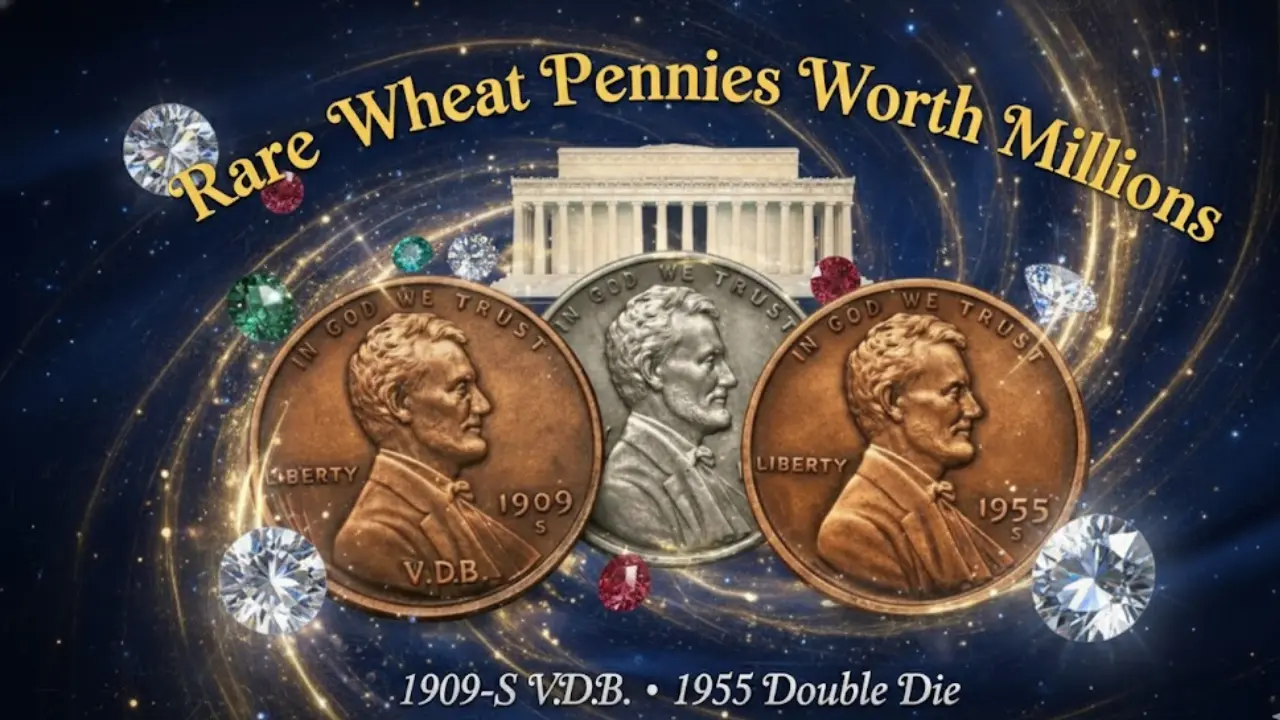
Wheat Pennies Have you ever looked at an old coin and wondered if it could be valuable? In 2026, some rare Wheat pennies are selling for astonishing prices, surprising many people who once ignored them as spare change. These small copper coins were part of everyday American life for decades, yet a few special examples are now worth thousands or even millions of dollars. What makes them so valuable is not just their age but their rarity, minting mistakes, and historical importance. Collectors across the world actively search for these coins, hoping to find a hidden treasure in a collection, coin jar, or inherited box of old currency. While most Wheat pennies are common and worth only a small premium, certain rare pieces stand out because of unique production errors or very limited numbers released into circulation.
Valuable Wheat Pennies – 2026 Price Overview
| Coin Name | Year | Key Feature | Estimated Value (2026) |
|---|---|---|---|
| 1943 Copper Penny | 1943 | Mistakenly struck in copper | $200,000 – $1,000,000+ |
| 1909-S VDB Penny | 1909 | Designer initials, low mintage | $700 – $150,000+ |
| 1914-D Penny | 1914 | Rare Denver issue | $150 – $100,000+ |
| 1922 No D Penny | 1922 | Missing mint mark error | $500 – $12,000+ |
| 1955 Doubled Die Penny | 1955 | Visible doubled text | $1,000 – $100,000+ |
| 1958 Doubled Die Penny | 1958 | Rare doubling error | $5,000 – $50,000+ |
The Beginning of the Lincoln Wheat Penny
The Lincoln Wheat Penny was first introduced in 1909 to honor the 100th birth anniversary of Abraham Lincoln. This marked an important moment in U.S. coin history because it was the first regular circulating American coin to feature a real historical person instead of symbolic imagery. The front of the coin displays Lincoln’s portrait, while the reverse side shows two wheat stalks, giving the coin its popular name, “Wheat Penny.” These coins were minted until 1958, after which the design changed to the Lincoln Memorial reverse. Over nearly five decades, Wheat pennies witnessed world wars, economic depression, and major social changes, making them meaningful pieces of history beyond their monetary value.
Why Some Wheat Pennies Are Extremely Valuable
Not every old coin automatically becomes valuable. The price of a Wheat penny depends on rarity, condition, mint mark, and demand among collectors. Coins produced in smaller quantities or those with minting mistakes are usually more desirable. Condition plays a major role as well. A coin that looks almost new, with clear details and minimal wear, can sell for significantly higher amounts than a worn example. Some coins became rare due to production changes during wartime, while others gained value because of accidental design errors that were never meant to be released. Collectors carefully study these differences, and even small details can dramatically increase a coin’s worth.
Most Valuable Wheat Pennies in 2026
One of the most famous and valuable examples is the 1943 Copper Penny. During 1943, pennies were primarily made of steel to save copper for World War II supplies. However, a few copper blanks were mistakenly used, creating one of the rarest error coins in American history. These rare copper pennies have sold for hundreds of thousands and even over a million dollars depending on condition. Another highly sought-after coin is the 1909-S VDB Penny, which includes the designer’s initials “VDB” on the reverse and was minted in limited numbers in San Francisco. The 1914-D Penny is also scarce, particularly in well-preserved condition. Error coins like the 1955 Doubled Die Penny are popular because the doubling in letters and numbers is clearly visible, making them easy to identify and highly collectible. Similarly, the 1922 No D Penny is valuable because the Denver mint mark is missing due to a striking issue.
How to Check If Your Wheat Penny Is Rare
If you believe you might own a valuable Wheat penny, begin by checking the year and mint mark located below the date. Mint marks such as “S” for San Francisco or “D” for Denver can significantly affect value. Use a magnifying glass to inspect details carefully and look for doubling in letters or numbers. If you have a 1943 penny, test it with a magnet; steel pennies will stick, but rare copper ones will not. Avoid cleaning your coin, as cleaning can damage the surface and reduce its value. Store coins in protective holders to prevent scratches and environmental damage. For coins that appear rare or unusual, professional grading services can authenticate and assign a condition grade, which often increases buyer confidence and market value.
Market Trends for 2026
In 2026, interest in rare coins continues to grow due to online auctions and increased awareness through social media and collector forums. As more people learn about valuable Wheat pennies, demand rises, pushing prices higher for authenticated examples. However, collectors should remain cautious and verify authenticity before making expensive purchases. Counterfeit coins exist, especially for high-value pieces like the 1943 copper penny. Buying from reputable dealers and certified auction houses is always recommended.
Final Thoughts
Rare Wheat pennies prove that even the smallest objects can hold great value. While most coins remain common, a few special examples continue to attract serious collectors and investors. Taking time to examine old coins carefully could reveal a surprising treasure.