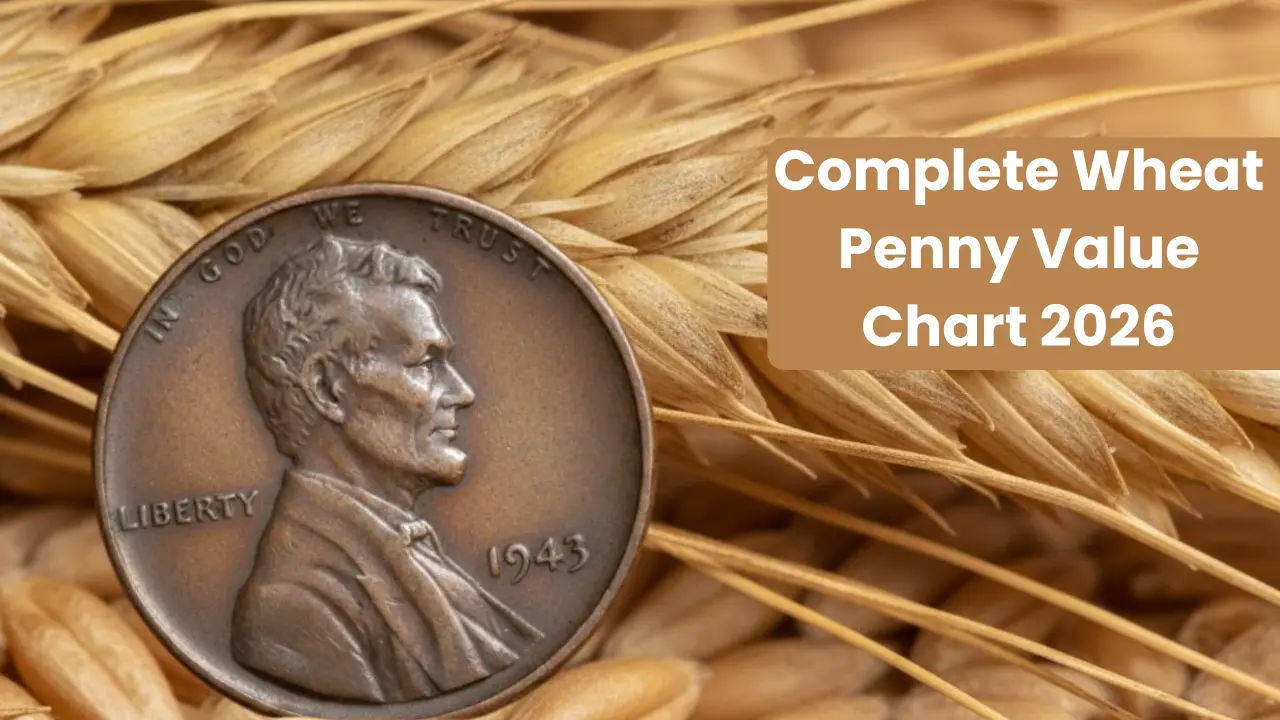
Wheat Penny The Lincoln Wheat Penny is one of the most collected coins in the United States. Minted from 1909 to 1958, this small copper coin carries big historical and collector value. While many Wheat Pennies are still found in old collections and piggy banks, only a few specific dates and errors are truly rare. In 2026, interest in Wheat Pennies remains strong because collectors value both their history and long-term price growth. This guide explains Wheat Penny values in a simple way, covering rare dates, mint marks, famous errors, and how prices have changed over time.
History and Background of the Wheat Penny
The Wheat Penny was first released in 1909 to mark the 100th birth anniversary of Abraham Lincoln. It became the first U.S. coin to feature a real historical person instead of symbolic figures. The front side shows Lincoln’s portrait, while the back displays two wheat stalks, representing growth and prosperity. These pennies were produced at Philadelphia, Denver, and San Francisco mints, which is why mint marks play a major role in determining value today.
What Makes a Wheat Penny Valuable
Not every Wheat Penny is rare, but certain factors can greatly increase its worth. Coins with low mintage numbers are harder to find, which naturally raises demand. Mint marks such as “S” and “D” often indicate fewer coins were produced compared to Philadelphia issues. Condition also matters a lot; coins that are well-preserved or graded by professional services sell for much higher prices. Error coins, including double dies and wrong-metal strikes, are especially valuable because they were produced by mistake and released into circulation.
Rare Wheat Pennies and Estimated Values in 2026
Below is a detailed value table showing some of the most important Wheat Pennies, their features, and approximate prices in 2026. Actual prices may vary depending on condition and market demand.
| Year | Mint Mark | Special Feature | Estimated Value (2026) | Collector Notes |
|---|---|---|---|---|
| 1909 | S | VDB initials | $100,000+ | Most famous Wheat Penny |
| 1914 | D | Low mintage | $75,000+ | Rare in high grades |
| 1922 | No D | Missing mint mark | $50,000+ | Popular error coin |
| 1931 | S | Low mintage | $25,000+ | Depression-era issue |
| 1943 | None | Copper planchet error | $250,000+ | Legendary rarity |
| 1944 | None | Steel planchet error | $200,000+ | Transitional error |
| 1955 | None | Strong double die | $150,000+ | Very popular error |
| 1926 | S | Low survival rate | $20,000+ | Hard to find in mint state |
| 1911 | S | Early year issue | $15,000+ | Collector favorite |
| 1936 | None | Double die obverse | $10,000+ | Visible doubling |
| 1924 | D | Scarce date | $12,000+ | Low remaining examples |
| 1958 | None | Double die | $125,000+ | Extremely rare |
Famous Wheat Penny Errors
Error coins are one of the biggest reasons Wheat Pennies attract high prices. The 1943 Copper Penny is famous because most pennies that year were made from steel. Only a few copper examples exist, making them extremely valuable. Another popular error is the 1955 Double Die, where doubling is clearly visible on the date and lettering. These errors are easy to recognize and highly desired by collectors, which keeps their prices strong year after year.
How Wheat Penny Prices Have Changed Over Time
Wheat Penny values have increased steadily over the decades. In the 1960s, collectors started saving Wheat Pennies as they disappeared from circulation. During the 1980s, rare dates gained attention and prices began rising faster. By the early 2000s, auction sales of major error coins crossed six figures. In the 2020s, renewed interest in physical collectibles pushed prices even higher, especially for certified and error coins.
Tips for Collecting Wheat Pennies
New collectors should start by learning key dates and mint marks. It is always better to buy fewer high-quality coins rather than many low-grade ones. Error coins should be authenticated to avoid counterfeits. Proper storage, such as protective holders, helps preserve coin condition and value. Keeping track of auction results also helps collectors understand current market trends.
Conclusion
The Lincoln Wheat Penny remains a timeless collectible in 2026. Its mix of history, rarity, and strong price performance makes it appealing to both beginners and experienced collectors. Rare coins like the 1909-S VDB and famous errors such as the 1943 Copper Penny continue to set record prices. With the right knowledge and careful collecting, Wheat Pennies can be both a rewarding hobby and a valuable long-term investment.